

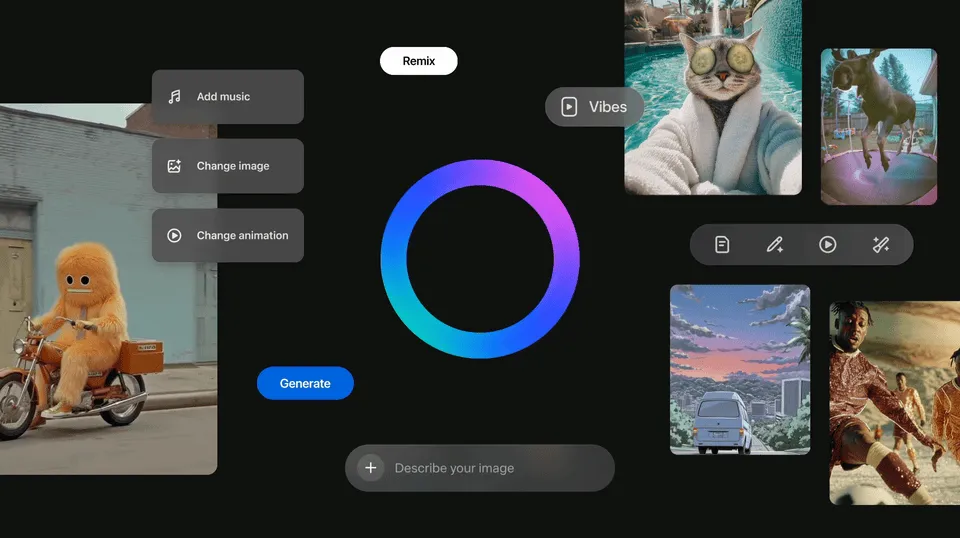
AI-generated video content is fundamentally shifting the boundaries of what we once thought was possible in the realm of digital storytelling and corporate communication. Not long ago, producing a high-quality video required a massive budget, a full production crew, and weeks of meticulous editing. Today, a solo entrepreneur sitting in a quiet coffee shop can generate stunning, lifelike visuals simply by typing a descriptive prompt into a specialized software interface. This transition represents a democratization of creativity that we haven’t seen since the invention of the smartphone camera, and it is happening at a pace that is both exhilarating and slightly dizzying for those in the industry.
Imagine a small business owner named Marcus who wants to launch a series of educational videos for his artisanal coffee brand. In the traditional world, Marcus would have to hire a videographer, find a location that isn’t too noisy, and spend hours recording multiple takes just to get the lighting right. With modern synthetic media tools, he can now create a virtual avatar that looks and speaks just like a professional presenter. The avatar can explain the nuances of bean roasting in twenty different languages, all while Marcus focuses on the actual quality of his product. This isn’t just a time-saver; it is a fundamental expansion of what his brand is capable of achieving on a global scale.
The technology behind these visuals relies on complex neural networks that have been trained on millions of hours of existing footage. These systems don’t just “copy and paste” images; they understand the underlying physics of light, the way fabric moves in the wind, and the subtle micro-expressions that make a human face look real. When you ask a tool to create a scene of a sunset over a futuristic city, the AI is essentially “dreaming” those pixels into existence based on its deep understanding of what a sunset and a city are supposed to look like. It is a blend of advanced mathematics and artistic interpretation that is rapidly closing the gap between human-made and machine-made media.
The Evolution and Mechanics of AI-generated video content
To truly appreciate where we are going, we have to look at the rapid evolution of this field over the last few years. We started with very simple, almost cartoonish animations that were clearly artificial. Then came the era of “deepfakes,” which, while controversial, demonstrated that we could map one person’s face onto another with startling accuracy. Now, we have entered the age of full-scene synthesis, where entire environments and characters are created from scratch without any live-action source material. This progress is driven by a combination of Generative Adversarial Networks and Diffusion models, which have become the industry standard for high-fidelity output.
The beauty of AI-generated video content lies in its versatility across different sectors. In the world of cinema, filmmakers are using these tools to create pre-visualization sequences that allow them to “see” a movie before a single frame is shot. This saves millions of dollars in production costs by identifying potential issues with pacing or composition early in the process. Similarly, in the world of social media, creators are using AI to generate background environments that would be impossible or too expensive to visit in real life, allowing for a level of production value that was previously reserved for major Hollywood studios.
However, the technology is not just about the big and the flashy; it is also about the subtle and the functional. One of the most practical applications we are seeing today is in the field of automated localization. Traditionally, dubbing a video into a new language meant losing the sync between the speaker’s lips and the new audio. New intelligent tools can now re-animate the speaker’s mouth in real-time to match the new language perfectly. This makes the viewing experience much more natural and allows information to be shared across linguistic barriers more effectively than ever before.
Why AI-generated video content is the Ultimate Growth Hack
For marketing professionals and content creators, the ability to scale production is the most compelling reason to embrace these new workflows. The internet has an insatiable appetite for video, and most teams simply cannot keep up with the demand using traditional methods. When you integrate synthetic media into your strategy, you are essentially moving from a “craft” model of production to an “industrial” model. You can test a dozen different versions of a video advertisement in a single afternoon, seeing which colors, scripts, or characters resonate most with your audience without having to go back to a physical set.
The cost-effectiveness of AI-generated video content cannot be overstated. When you remove the need for physical sets, travel, catering, and expensive equipment rentals, the barrier to entry for high-quality video drops to almost zero. This allows non-profits, educators, and startups to tell their stories with the same visual polish as a Fortune 500 company. It levels the playing field in a way that prioritizes the quality of the idea over the size of the bank account. In a world where attention is the most valuable currency, having the ability to produce beautiful, engaging videos consistently is a massive competitive advantage.
Personalization is another area where these tools are creating entirely new categories of engagement. Imagine receiving a “thank you” video from a brand where the spokesperson actually says your name and mentions the specific item you just purchased. Doing this manually for thousands of customers would be impossible, but with AI, it can be automated as part of the checkout process. This creates a powerful emotional connection with the consumer, making them feel seen and valued in a way that a generic email simply cannot match. It is the bridge between mass production and individual attention.
Navigating the Ethics and Authenticity of Synthetic Media
As we move further into this new landscape, we must address the significant ethical questions that arise when we can no longer believe our own eyes. The potential for misuse is real, particularly in the realms of political misinformation and identity theft. This is why the industry is currently working on robust watermarking and provenance standards. The goal is to create a “digital paper trail” that allows viewers to know exactly how a piece of media was created and whether it has been altered. Transparency is the only way to maintain trust in a world where reality can be simulated with a few clicks.
There is also a profound discussion happening about the role of human artists in this new era. Some fear that AI will replace the need for directors, editors, and actors. However, if we look at history, new tools usually change the nature of the work rather than eliminating it. The camera didn’t kill painting; it freed painters to explore abstraction. Similarly, AI-generated video content is freeing video professionals from the repetitive, technical aspects of their jobs, allowing them to focus more on the high-level conceptual and emotional aspects of storytelling. The “soul” of a video still comes from the human who prompted the machine and curated the final result.
Expertise in this field is now less about knowing how to focus a lens and more about knowing how to communicate with an algorithm. We are seeing the rise of “prompt engineering” as a vital skill set, where the ability to describe a vision in precise, evocative language is the key to getting the best results. A director who understands the history of lighting, color theory, and narrative structure will always produce better AI videos than someone who doesn’t, because they know what “good” looks like. The machine is a powerful instrument, but it still needs a skilled conductor to make music.
The Technical Frontiers and the Future of Frame Consistency
One of the biggest hurdles that researchers are currently overcoming is the issue of “temporal coherence” or frame consistency. In earlier versions of AI video, you might see a character’s shirt change color slightly from one second to the next, or the background might “jitter” in a way that feels unnatural. Solving this requires the AI to have a form of “memory,” understanding what happened in the previous frame so it can maintain consistency in the next. The latest models have made massive leaps in this area, creating videos that are increasingly indistinguishable from traditional footage in their stability and flow.
We are also moving toward a future of “interactive video,” where the viewer can influence the direction of the content in real-time. Imagine an educational video about history where you can ask the presenter a question, and the AI generates a custom response and visual explanation on the fly. This turns video from a passive experience into a two-way conversation, which could revolutionize the way we learn and consume entertainment. We are essentially building the foundations for the “holodeck” style experiences that were once the stuff of science fiction.
The environmental impact of this technology is also a topic of serious study. Training these massive models and running the servers that generate the videos requires a significant amount of electricity. As AI-generated video content becomes more common, the industry is under pressure to find more efficient ways to process data and to use renewable energy sources for their data centers. Sustainability is becoming a key factor in how companies choose which AI platforms to partner with, as they look to balance the benefits of innovation with their corporate social responsibility goals.
Real-World Integration and the New Workflow
For a modern creative agency, the workflow is shifting from a linear process to a more iterative, collaborative one. In a traditional setup, the writer writes, the film crew shoots, and the editor cuts. In an AI-enhanced workflow, these stages often happen simultaneously. A writer might generate a few frames of AI video to see if their dialogue fits the mood they are imagining. An editor might use AI to extend a shot or change the lighting of a scene after it has already been “filmed.” This fluidity allows for a much more experimental and adventurous creative process.
We should also consider the impact on the stock footage industry. For years, creators relied on libraries of pre-shot clips to fill gaps in their projects. However, finding the “perfect” clip often took hours of searching through thousands of generic options. Now, creators can just generate exactly what they need. This is forcing stock footage companies to evolve, with many of them now offering their own AI generation tools trained on their high-quality, licensed libraries. It is a shift from “search and find” to “imagine and create,” and it is making the life of a video editor much more efficient.
The accessibility of these tools is also a major story for the global south and developing economies. In regions where professional film equipment is prohibitively expensive or difficult to import, AI-generated video content provides a way for local voices to be heard on the global stage. It allows for the creation of high-quality educational content in local dialects and the preservation of cultural stories through vivid animation. By lowering the cost of entry, we are inviting a much more diverse group of people into the global conversation, which can only be a good thing for our collective culture.
Practical Advice for Getting Started with AI Video
If you are a creator looking to dive into this world, the best advice is to start by experimenting with the many “freemium” tools available today. Don’t worry about creating a masterpiece on your first try; focus on understanding how different prompts affect the output. Learn the “vocabulary” of the AI, such as how it interprets words like “cinematic lighting,” “depth of field,” or “hyper-realistic.” The more you play with the technology, the more you will begin to see its limitations and its hidden strengths. It is a process of discovery that requires a curious and patient mindset.
Collaboration is also key. There are thriving online communities where people share their prompts, their failures, and their breakthroughs. Joining these groups can drastically shorten your learning curve and provide you with inspiration that you wouldn’t find on your own. Many of the most innovative techniques in AI video today were discovered by hobbyists experimenting in their spare time and sharing their results with the world. It is a “social learning” environment that is moving much faster than any traditional university curriculum could ever hope to.
Finally, always keep the human element at the center of your work. Technology is a tool, but your unique perspective, your emotions, and your life experiences are what make your content worth watching. Use AI to handle the heavy lifting, the technical hurdles, and the repetitive tasks, but make sure that the final product reflects your voice. The most successful creators of the future won’t be the ones who use the most AI; they will be the ones who use AI to express their human vision most clearly and powerfully.
The Long-Term Vision for Visual Storytelling
As we look toward the end of this decade, it is likely that the distinction between “AI video” and “traditional video” will begin to disappear. Most professional video editing software will have AI features built-in as standard, from automatic color grading to the ability to “generatively fill” parts of a frame. We will simply call it “video production,” and the fact that an algorithm helped create the pixels will be as unremarkable as the fact that a digital sensor captured the light in a modern camera today.
This transition will lead to an explosion of niche content. Because it is so much cheaper to produce, we can have high-quality shows and movies tailored to very specific interests that would never have been “marketable” enough for a major network. We are moving toward a world of “infinite media,” where there is always something perfectly suited to your current mood, your level of knowledge, and your personal taste. While this poses challenges for our shared cultural experiences, it offers incredible opportunities for personal growth and specialized education.
The future of visual media is not about the replacement of humans by machines, but about the incredible things that happen when they work together. We are at the very beginning of a new golden age of storytelling, where the only limit is the reach of our own imagination. As the tools continue to improve, the friction between having an idea and seeing it on a screen will continue to vanish. It is a thrilling time to be a creator, and the best is surely yet to come for those who are ready to embrace the power of intelligent automation in their creative journey.