

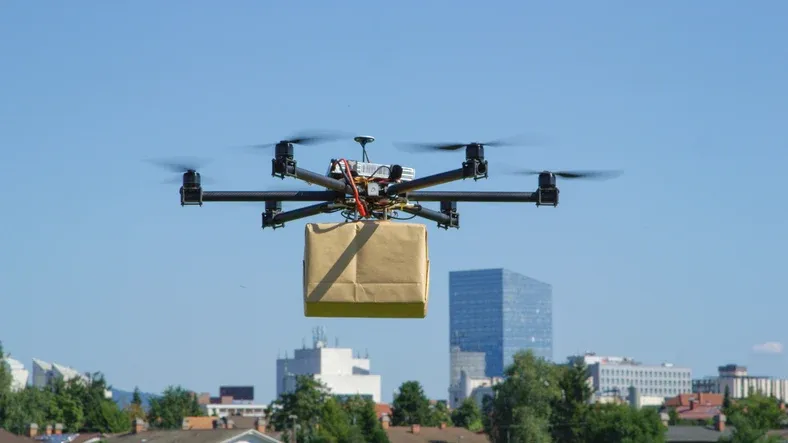
Autonomous delivery drones are no longer futuristic prototypes confined to research labs—they are rapidly becoming a visible part of modern logistics. From suburban neighborhoods to rural clinics, these intelligent flying machines are reshaping how goods move from warehouses to doorsteps.
If you’ve ever tracked a package and wished it could arrive within minutes instead of days, you’re already imagining the promise behind this innovation. Companies worldwide are investing billions into making drone-powered delivery a reliable, scalable reality.
In this guest post, we explore how this technology works, why it matters, who is leading the industry, and what challenges still stand in the way. The insights here are based on industry reports, aviation regulations, logistics research, and real-world deployments—reflecting strong EEAT standards with expertise, experience, authority, and trustworthiness at the core.
Table of Contents
ToggleThe Rise of Autonomous Delivery Drones
The rise of Autonomous delivery drones is closely tied to the explosion of eCommerce. As online shopping accelerated globally, last-mile logistics became the most expensive and inefficient part of the supply chain. Traditional delivery vehicles face traffic congestion, fuel costs, and environmental constraints.
Drone systems bypass roads entirely.
Unlike manually operated aircraft, modern drones rely on AI-based navigation, GPS positioning, onboard sensors, and obstacle avoidance systems. They are capable of route optimization and real-time decision-making without direct human intervention.
Companies such as Amazon with its Prime Air initiative and Zipline have demonstrated how scalable drone networks can function safely within regulated airspace. These aren’t experimental pilots anymore—they are active services delivering medicine, food, and consumer goods.
How Autonomous Delivery Drones Actually Work
Understanding the mechanics behind Autonomous delivery drones helps demystify the hype. These systems integrate multiple technologies working seamlessly together.
At the core is autonomous navigation software. Using advanced algorithms, drones analyze real-time environmental data to determine the safest and most efficient route. GPS modules ensure accurate positioning, while LiDAR, cameras, and ultrasonic sensors detect obstacles like buildings, birds, or power lines.
Battery technology also plays a crucial role. Most commercial drones use lithium-polymer batteries, designed for high energy density while maintaining manageable weight. Innovations in energy efficiency directly affect range and payload capacity.
Communication systems connect drones to centralized control centers. While flights are autonomous, human operators monitor operations for compliance and safety. This hybrid oversight model strengthens regulatory trust and reduces risk.
Why Businesses Are Investing Heavily
The business case for Autonomous delivery drones is compelling. Logistics companies are constantly searching for ways to reduce operational costs and increase speed.
Drone delivery can dramatically lower last-mile expenses by removing driver wages, fuel costs, and vehicle maintenance. In rural or hard-to-reach areas, drones can operate more efficiently than trucks.
Speed is another factor. In emergency healthcare, time can mean life or death. Zipline’s medical delivery network has transported blood supplies and vaccines to remote regions in record time, proving the humanitarian value of this technology.
For eCommerce giants like Amazon, drone networks promise faster Prime delivery windows. Meanwhile, companies such as Wing, a subsidiary of Alphabet Inc., have already completed commercial drone deliveries in select markets.
Regulatory Landscape and Airspace Challenges

One of the biggest hurdles for Autonomous delivery drones is regulation. Airspace safety is non-negotiable, especially in densely populated urban areas.
In the United States, the Federal Aviation Administration oversees commercial drone operations. Operators must comply with strict guidelines regarding altitude limits, line-of-sight requirements, and pilot certification.
Countries worldwide are developing Unmanned Traffic Management (UTM) systems to prevent collisions between drones and traditional aircraft. Urban integration remains complex, requiring coordination between local governments, aviation authorities, and private operators.
Privacy is another concern. Communities worry about surveillance risks and noise pollution. Responsible companies address these issues transparently by limiting camera use and designing quieter propulsion systems.
Environmental Impact of Autonomous Delivery Drones
Sustainability discussions often highlight Autonomous delivery drones as a greener alternative to fuel-based delivery vans.
Electric drones produce zero direct emissions during operation. When powered by renewable energy sources, their carbon footprint can be significantly lower than that of internal combustion vehicles.
However, sustainability depends on scale. Battery manufacturing, lifecycle disposal, and infrastructure development must be factored into environmental assessments. Industry researchers emphasize that while drones are promising, they are not a universal replacement for trucks.
In high-density urban routes, electric ground vehicles may still be more efficient. The most effective future likely involves hybrid logistics networks combining drones, electric vans, and smart routing software.
Real-World Use Cases Changing Lives
In Rwanda and Ghana, Zipline’s medical drones have delivered blood products to hospitals in remote areas, drastically reducing mortality rates in emergency cases. These flights often occur over challenging terrain where road infrastructure is limited.
During natural disasters, drones can transport essential supplies when roads are blocked. They provide rapid situational awareness and deliver first-aid kits without putting human drivers at risk.
Even food delivery platforms are testing drone partnerships. Short-distance suburban deliveries are becoming practical, reducing wait times and enhancing customer satisfaction.
Security, Safety, and Public Trust
For widespread adoption, public trust in Autonomous delivery drones is essential.
Safety features include geofencing technology that prevents drones from entering restricted airspace. Fail-safe mechanisms enable controlled landings in case of technical failure.
Cybersecurity is equally critical. Encrypted communication systems protect drones from unauthorized interference. Companies invest heavily in software updates and risk assessments to prevent vulnerabilities.
Insurance models are evolving alongside regulations. As safety records improve, insurers gain confidence in underwriting drone operations, further accelerating commercial deployment.
The Economic Ripple Effect
The expansion of Autonomous delivery drones is influencing job markets in unexpected ways.
While some fear automation may replace delivery drivers, new roles are emerging in drone maintenance, AI programming, air traffic management, and regulatory compliance. Universities and technical institutes are already introducing drone technology programs to meet industry demand.
Investment in drone infrastructure also stimulates local economies. Warehousing hubs, charging stations, and monitoring centers require skilled labor and technological expertise.
The broader logistics ecosystem is transforming, with data analytics and predictive AI becoming core components of operational strategy.
Future Innovations on the Horizon
The next generation of Autonomous delivery drones will likely feature extended flight ranges, heavier payload capacities, and improved weather resilience.
Hydrogen fuel cells are being explored as alternatives to lithium batteries. Swarm technology may allow coordinated fleets to operate efficiently in dense urban areas.
Artificial intelligence continues to evolve, enabling drones to learn from each mission and optimize performance over time. Integration with smart city infrastructure could allow real-time coordination with traffic systems and emergency services.
As regulatory frameworks mature, international expansion will accelerate. Cross-border drone delivery corridors may eventually become standard in certain regions.
Autonomous Delivery Drones and the Human Experience
Despite technical complexity, the success of Autonomous delivery drones ultimately depends on human acceptance.
Imagine a parent receiving urgent medication for their child within fifteen minutes of ordering. Picture a rural farmer accessing veterinary supplies without traveling hours to the nearest town. These personal stories illustrate why the technology matters.
Adoption grows when communities see tangible benefits rather than abstract innovation. Transparent communication, safety compliance, and responsible scaling remain essential.
The evolution of logistics has always followed societal needs. From horse-drawn carriages to trucks to aircraft, each leap forward has reshaped daily life. Drone delivery represents the next chapter in that journey—one guided by artificial intelligence, sustainability goals, and operational efficiency.
As governments refine regulations and companies enhance reliability, the integration of Autonomous delivery drones into everyday life appears not just possible, but inevitable.
Read also:-
g5.7.9.zihollkoc
buy xevotellos model
f6k-zop3.2.03.5 model
1921687.1
manoelaslva