

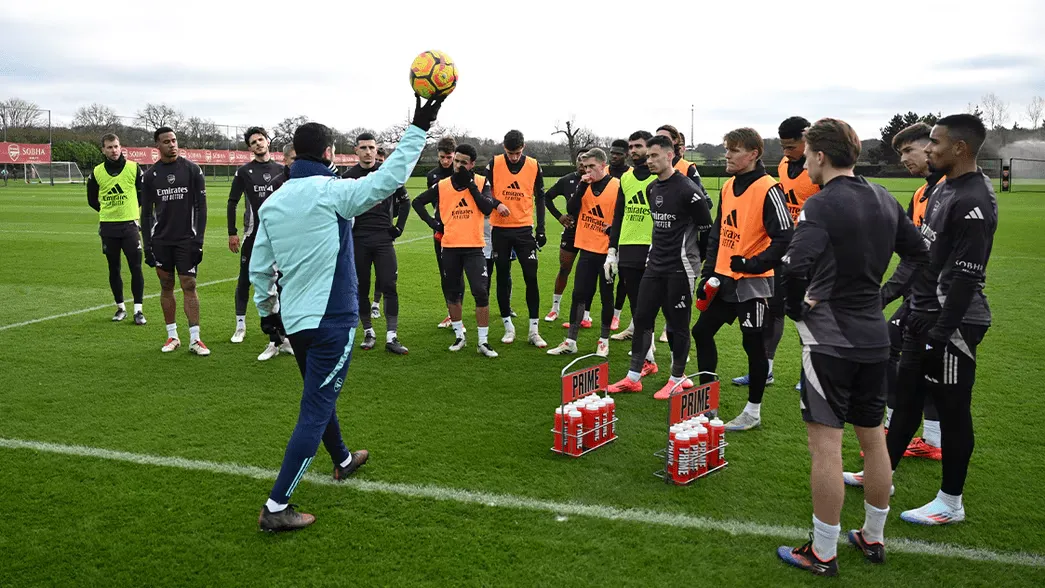
Matchday squad rotation is the invisible engine that powers the world’s most successful football teams through a long and grueling season. In the modern era of high-intensity sports, the idea of playing the same eleven players every single week has become a relic of the past. As the speed of the game increases and the number of competitions grows, managers are forced to become master jugglers of human resources. This isn’t just about giving tired players a rest; it is a sophisticated tactical approach that determines who stays sharp and who burns out when the trophies are actually decided in May.
The evolution of professional sports has transformed the bench from a place of secondary importance into a strategic weapon. A decade or two ago, rotation was often seen as a sign of weakness or a lack of a “settled” team. Today, it is a hallmark of elite management. When a coach decides to swap out their star striker for a fresh pair of legs, they are playing a long game that accounts for heart rate variability, muscle fatigue, and psychological freshness. This shift has changed the very nature of how squads are built, moving away from a fixed starting lineup toward a fluid roster of twenty-five “starters.”
To understand the complexity of this strategy, one must look at the immense physical toll of the modern football calendar. Players are now expected to cover more ground at higher speeds than at any other point in history. The rise of high-pressing systems and rapid transitions means that a midfielder’s engine is constantly pushed to its absolute limit. Without a proper system of rest, the risk of soft-tissue injuries like hamstring tears or calf strains increases exponentially. Therefore, the medical staff has become just as influential as the tactical coaches in deciding who makes the final team sheet.
The Scientific Necessity of Matchday squad rotation
The science behind elite performance has reached a level of precision that would baffle previous generations of athletes. On any given Monday morning, a manager sits down with a team of sports scientists to review data from GPS trackers, sleep monitors, and even daily blood tests. These metrics provide a “readiness score” for every individual in the squad. If a key defender’s markers show high levels of cortisol or signs of muscle inflammation, the manager knows that starting them in a midweek cup game could lead to a month-on-the-sidelines injury.
This data-driven approach has made matchday squad rotation a mathematical necessity rather than a gut feeling. We often see fans on social media complaining when their favorite player is “dropped” for a seemingly minor game. What the fans don’t see are the internal reports indicating that the player is in the “red zone.” In this high-stakes environment, resting a player for ninety minutes is a proactive investment in their availability for the next ten matches. It is a protective measure that keeps the team’s overall quality high throughout the winter months when the schedule is most demanding.
Furthermore, the introduction of the five-substitution rule in many top leagues has fundamentally altered the rhythm of rotation. Managers can now rotate up to fifty percent of their outfield players during the ninety minutes of play. This allows them to start their “heavy hitters” but withdraw them early once a result is secured, or conversely, save their most explosive talent for the final thirty minutes against a tiring defense. This “mid-game rotation” has become a vital sub-strategy that keeps the intensity of the play at a peak from the first whistle to the last.
Balancing Egos and Maintaining Player Morale
One of the most difficult aspects of managing a top-tier squad is the psychological management of elite athletes. Every professional player wants to be on the pitch for every single minute of every game. Telling a world-class talent that they are sitting out a big match to “manage their load” requires immense diplomatic skill and a high level of trust. If a player feels they are being marginalized rather than rested, it can lead to a toxic atmosphere in the dressing room that eventually undermines the entire team’s performance.
Successful managers handle this by creating a culture where every member of the squad feels valued and understands their specific role in the season’s objectives. They frame matchday squad rotation as an opportunity for the entire group to contribute toward a shared goal. When a fringe player steps in and performs well, it sends a message to the regular starters that they cannot afford to be complacent. This internal competition is healthy, as it drives everyone to maintain high standards in training, knowing that their chance could come at any moment.
There is also the “rhythm” factor to consider. Some players thrive on playing twice a week and find that they lose their sharpness if they are rested for too long. A striker who is in a rich vein of scoring form might find that a week on the bench “cools” their instinct in front of goal. Managers must therefore weigh the physical benefits of rest against the psychological benefits of momentum. It is a delicate balancing act that requires a deep understanding of each individual’s personality and physical profile.
Strategic Benefits of Matchday squad rotation in Long Seasons
Beyond the physical health of the players, there are significant tactical advantages to a well-executed rotation policy. By regularly changing the personnel, a manager makes it much harder for opposing scouts to predict their game plan. If a team uses different combinations of midfielders or wingers every three days, the opposition cannot easily prepare for a specific set of patterns or individual strengths. This element of surprise can be the difference-maker in tight league races where everyone is looking for an edge.
Rotation also allows a manager to tailor their lineup to the specific weaknesses of the opponent. For example, a coach might choose a more physical, tall striker for a game against a team that struggles with aerial crosses, while opting for a smaller, nippier forward for a match against a slow-turning defensive line. Having a diverse squad and the willingness to rotate allows a team to be “tactically agnostic,” meaning they can adapt their style to whatever challenge is put in front of them. This versatility is often what separates the champions from the runners-up.
Moreover, a squad that has been rotated effectively is far more resilient to unexpected crises. If a star player suffers a long-term injury in February, the “backup” player who has been getting regular minutes through rotation will be much better prepared to step in than a player who has spent six months purely on the bench. Match sharpness cannot be replicated on the training ground; it requires the pressure and pace of real competition. A manager who rotates early in the season is effectively “insuring” their team against the inevitable injuries that happen later on.
The Impact on Team Chemistry and Cohesion
A common criticism of heavy rotation is that it can disrupt the “chemistry” of the team. We often hear about the importance of “automatic” understandings between players—knowing where a teammate will run without even looking. When the lineup changes constantly, critics argue that these connections are never allowed to form, leading to a disjointed and clunky performance. This is particularly noticeable in the defensive line, where communication and positioning rely on a high degree of familiarity between the center-backs and the goalkeeper.
To mitigate this, elite coaches often rotate in “pods” or small groups. They might keep the defensive unit consistent while rotating the forward line, or vice versa. By maintaining a “spine” of consistent players, they can introduce fresh legs around them without completely losing the team’s identity. This approach ensures that the fundamental structure of the team remains intact, even as the specific individuals within that structure change from game to game. It is a way to have the best of both worlds: fresh energy and tactical consistency.
The training ground becomes the laboratory where this chemistry is built. In the modern game, training sessions are often conducted with mixed groups to ensure that everyone is comfortable playing with everyone else. A reserve winger will spend hours practicing crosses to the starting striker, and the second-choice goalkeeper will work on distribution with the first-choice defense. This holistic approach to training ensures that when matchday squad rotation occurs, the transition is as seamless as possible for the players involved.
Managing the “Winter Period” and Congested Schedules
In leagues like the Premier League, the period between December and January is often where the title is won or lost. With games coming every forty-eight to seventy-two hours, the depth of the squad is tested to its absolute limit. This is the time when the “squad players”—those who might not start the biggest games of the season—become the most important people at the club. A team that can rely on their 18th or 19th player to deliver a winning performance in a rainy away game on a Tuesday night is a team built for success.
Managers who fail to rotate during this period often see their teams “hit a wall” in March or April. The players might not be injured, but their energy levels dip just enough to slow down their pressing or take the edge off their finishing. This “cumulative fatigue” is a silent killer of trophy ambitions. By contrast, teams that have been intelligently rotated often look like they have an extra gear during the final weeks of the season. They are physically fresher and mentally hungrier than their exhausted rivals.
This period also provides a vital opportunity for young academy prospects to break into the first team. Rotation in cup competitions or during busy league spells allows a manager to give minutes to talented teenagers without over-exposing them. For a young player, getting a start in a rotated lineup is a massive moment in their development. It gives them a taste of the professional level and allows the manager to see how they handle the pressure of a real matchday environment. Many legendary careers have been launched because a regular starter was being rested for a bigger game.
The Role of the “Supersub” and Game-Changer
A fascinating byproduct of the rotation era is the rise of the specialized “supersub.” This is a player who may not start many games but is incredibly effective when coming off the bench for the final twenty minutes. These players often possess high levels of pace or a unique physical presence that can exploit a tiring opposition. The manager views them not as a second-choice player, but as a specific tactical tool designed for the end-game scenario.
Being a regular substitute requires a specific mindset. The player must be able to stay focused and warm throughout the first seventy minutes of a game, ready to enter the fray at maximum intensity immediately. They must analyze the game from the sidelines, looking for gaps in the defense or patterns they can exploit. A manager who can rotate their “impact players” effectively essentially has a two-stage rocket: the starters wear the opponent down, and the substitutes finish them off.
This has changed how fans view the “starting XI.” We are moving toward a concept where the “finishing XI” is just as important. In many high-level games, the most decisive moments occur in the final quarter of the match, often involving players who didn’t even start the game. This shift has made the squad list a much more important document than the starting lineup. It is the total quality of the eighteen players involved on the day that determines the outcome, rather than just the initial eleven.
Fan Expectations and the “Tinkerman” Label
For the fans, witnessing constant changes to their team’s lineup can be a source of frustration. Supporters often develop an emotional connection to a specific set of players and want to see their heroes on the pitch at every opportunity. When a manager makes six or seven changes for a game, it can be interpreted as “disrespecting” the competition or the opponent. Historically, managers who rotated too much were given the pejorative nickname “Tinkerman,” suggesting they were over-complicating a simple game.
However, the modern fan is becoming increasingly aware of the realities of player fitness. The rise of fantasy sports and advanced statistics has given the average supporter a better understanding of why rotation is necessary. They can see the distance-covered stats and the injury reports, making them more sympathetic to a manager’s decision to rest a star player. While the desire to see the best players remains, there is a growing realization that “managing the minutes” is a sign of a smart, forward-thinking club.
The media also plays a large role in the narrative surrounding rotation. If a rotated team wins, the manager is praised for their “masterful squad management.” If the team loses, the same manager is criticized for “over-thinking” and “breaking the team’s rhythm.” This results-based analysis is a constant pressure for coaches, who must have the courage of their convictions to stick to their rotation plan even when a result doesn’t go their way. Long-term success requires a manager to ignore the noise and trust the data provided by their medical and coaching staff.
The Future of Squad Management and AI
As we look toward the future, the integration of artificial intelligence and machine learning is set to take squad management to even greater heights. We are already seeing the development of predictive algorithms that can calculate the exact percentage risk of an injury for a specific player based on their recent workload and historical data. In the future, a manager might receive a notification on their tablet suggesting the optimal minute to substitute a player to maximize their recovery for the following weekend.
This level of precision will make the job of the manager even more complex, as they will have to balance these scientific “recommendations” with their own tactical instincts and the emotional needs of the players. The human element will always remain central—AI cannot tell a manager if a player has the “fire in their eyes” during a pre-match warm-up—but the data will provide a much more stable foundation for decision-making. The “art” of management is becoming a high-tech discipline.
Ultimately, the goal of rotation is to ensure that the team is at its absolute peak when the stakes are at their highest. Whether it is a Champions League final or a crucial relegation battle, every manager wants their best players to be fit, sharp, and motivated. Achieving this requires months of careful planning, difficult conversations, and a relentless focus on the long-term health of the squad. In the end, the trophies are lifted by teams that have used their entire roster, proving that the strength of the pack is the wolf, and the strength of the wolf is the pack.
Every decision made on the training ground leads to the final performance on the pitch. The world of elite sports is one of marginal gains, and a well-rested player is a more effective player. By embracing the complexity of modern scheduling and utilizing the full depth of their squads, clubs are redefining what it means to be a “team.” The era of the fixed starting eleven is over, and the era of the high-performance squad has truly arrived. Through this lens, every substitution is not just a change, but a strategic step toward ultimate victory.
Read also :-
india national football team vs bangladesh national football team timeline
germany national football team vs france national football team lineups
guadalupe vs. guatemala
spain national football team vs england national football team lineups