

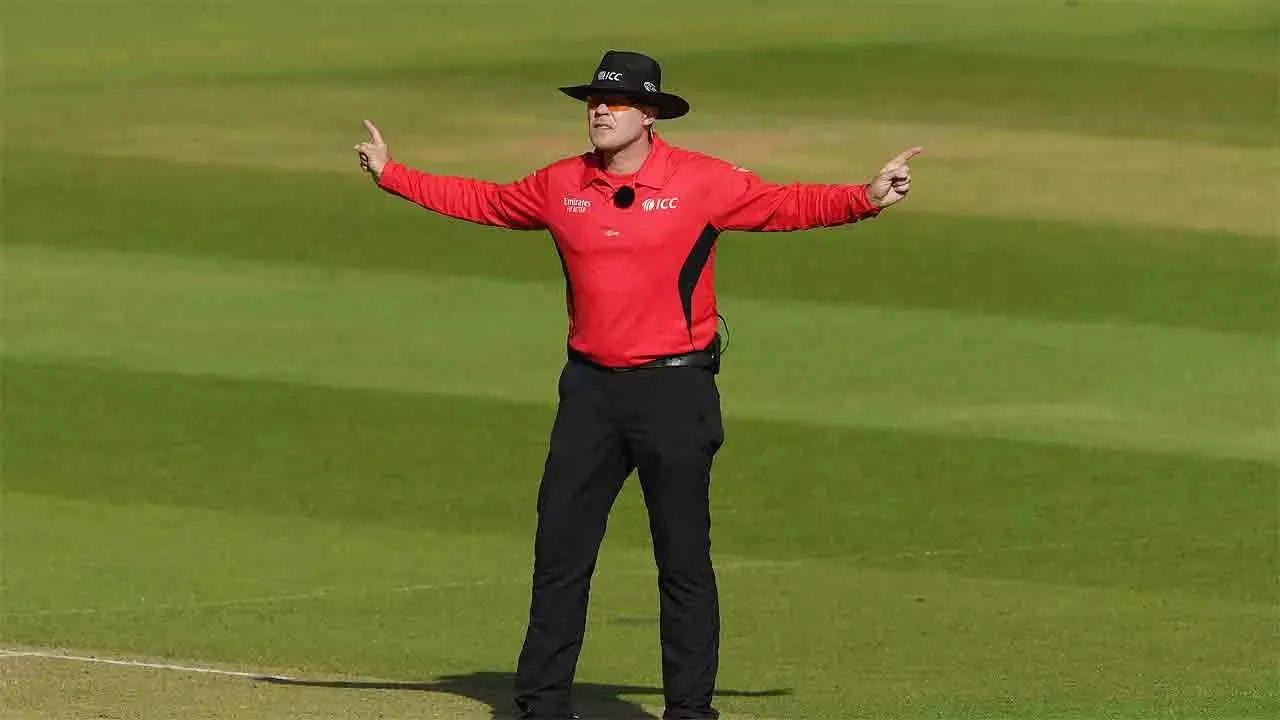
Wide Ball Decision Rules are often the subject of intense debate during the final overs of a high-stakes T20 match, where a single centimeter can be the difference between a championship trophy and a heartbreaking defeat. For the uninitiated, a wide ball seems like a simple concept: the bowler misses the mark, and the batting team gets a free run and an extra delivery. However, for those of us who have spent years on the pitch or analyzing the game from the commentary box, we know that the reality is far more nuanced and subjective.
The evolution of these rules has mirrored the transformation of cricket itself, moving from a gentlemanly pastime to a data-driven, high-speed spectacle. In the early days of the sport, umpires had a significant amount of “feel” for the game, deciding whether a ball was wide based on a general sense of fairness. Today, that subjectivity has been replaced by strict playing conditions, painted lines on the crease, and even the intervention of the Decision Review System (DRS).
Understanding the technicalities of these rules is essential for players, coaches, and fans who want to truly grasp the strategic depth of modern cricket. When a bowler aims for a wide yorker and the umpire remains silent, the roar of the crowd often drowns out the technical reasons behind that non-call. Was the batter standing too far across? Did the ball pass over the batter’s head? These are the questions that officials must answer in a split second under immense pressure.
Experience has taught us that the interpretation of a wide can change based on the format of the game being played. In a Test match, where the objective is to test the skill and patience of the batter over five days, the rules are generally more lenient. In contrast, the white-ball formats, particularly T20s, demand a much stricter interpretation to ensure that bowlers do not simply bowl out of reach to avoid being hit for boundaries. This balancing act between bat and ball is what makes the umpire’s job so incredibly difficult.
Navigating Wide Ball Decision Rules in Limited Overs Cricket
In the fast-paced world of One Day Internationals and T20s, Wide Ball Decision Rules are interpreted with a “strict” lens. The primary philosophy here is that the batter should have a reasonable opportunity to strike the ball from a normal batting stance. If a bowler delivers a ball so far away that the batter cannot reach it by playing a standard stroke, the umpire must signal a wide. This is usually guided by the “tramlines”—the white lines painted 17 inches inside the return creases.
One of the most frequent points of contention in modern limited-overs matches is the leg-side wide. According to the standard ICC playing conditions, any ball that passes behind the batter’s legs on the leg side, without touching their person or equipment, is automatically called a wide. This rule was implemented to stop bowlers from tucking the batter up or bowling “negative” lines where the batter cannot access the ball. It forces bowlers to be more precise, even if it feels harsh on a bowler trying to follow a moving target.
However, there is a catch that often surprises casual observers. If the ball passes between the batter and the stumps, or if it touches any part of the batter’s clothing or body, it cannot be a wide. This is a crucial distinction. We often see bowlers getting lucky when a ball that looks destined for a wide call brushes the flap of a pad or the edge of a jersey. In those moments, the umpire’s keen eye and ear are the only things standing between a penalty run and a dot ball.
The height of the ball also plays a role in these decisions. While a high full toss is usually a “No Ball,” a delivery that bounces so high that it passes over the batter’s head—while they are standing upright at the crease—is called a wide. In limited-overs cricket, bowlers are only allowed one or two bouncers per over (depending on the specific league rules). If they exceed this limit, the subsequent high balls are called No Balls, but the very first one that is “too high” is judged as a wide.
The Impact of Batter Movement on Umpiring Decisions
Perhaps the most significant update to Wide Ball Decision Rules in recent years involves how umpires account for the batter’s movement. In the modern era, batters are rarely stationary. They shuffle across to the off-side, move deep into their crease, or even switch their stance entirely. This dynamic movement used to make the wide rule a nightmare for officials, as a ball that was wide when the batter started might be perfectly reachable by the time it passes them.
The current interpretation states that if a batter moves across the stumps, the wide line moves with them. For example, if a batter shuffles toward the off-side, the umpire will give the bowler more leeway on that side. The logic is simple: if the batter has moved into a position where they can reach the ball, the bowler should not be penalized for following them. This change has brought a much-needed sense of fairness back to the contest, preventing batters from “gaming” the system to get extra runs.
Conversely, if a batter moves away from the ball, the umpire must still consider where the ball would have been in relation to a “normal” batting stance. This is where the expertise of an umpire is truly tested. They have to mentally “freeze-frame” the batter’s initial position and judge the ball against that phantom image. It is an incredible feat of cognitive processing that happens in less than a second, often while 50,000 people are screaming in the background.
I recall a specific match where a world-class finisher tried to step outside the off-stump to ramp a ball over fine leg. The bowler followed him with a wide delivery. The batter missed, and the ball ended up being inside the tramline relative to his new position, but outside the line relative to his original stance. The umpire correctly did not call a wide, much to the batter’s frustration. This interaction perfectly illustrates how the rule rewards bowlers who are observant enough to react to a batter’s pre-meditated movements.
Why Wide Ball Decision Rules Differ in Test Matches
When we shift our focus to Test cricket, the application of Wide Ball Decision Rules becomes noticeably more relaxed. In the longest format, the umpire will only call a wide if the ball is “manifestly out of reach.” This gives bowlers the freedom to bowl wider lines as a tactic to frustrate the batter or to lure them into a loose drive. Since there is no limit on the number of overs, the pressure to score quickly is less intense, and the batter is expected to work harder to find scoring opportunities.
This doesn’t mean a Test bowler has a license to bowl anywhere. If a bowler consistently bowls so wide that the batter has no chance of playing a stroke, the umpire will eventually intervene. This is often seen as “negative bowling,” and the umpire can warn the bowler before starting to call wides. It is a subtle game of cat and mouse. A bowler might bowl three balls just outside the tramline to test the batter’s patience, knowing the umpire won’t call it, before sliding one in to catch the edge.
The leg-side rule is also different in Tests. While any ball down the leg side is a wide in T20s, in Test matches, the ball has to be significantly wide of the leg stump to be penalized. This allows for tactics like “leg-theory” bowling, where several fielders are placed on the leg side and the bowler aims at the pads. While controversial at times, it is a legal part of the Test match struggle, provided the ball remains within a reachable distance for a determined batter.
This format-based distinction is one of the many reasons why cricket is such a complex sport to master. A player moving from the IPL to a Test series in England has to recalibrate their entire understanding of what a “good” delivery looks like. They have to adjust their leaving and hitting strategies based on how much room the umpire is going to give the bowler. It is a mental shift that is just as important as the physical adjustments to the swinging red ball.
The Introduction of DRS and the Future of Umpiring
For decades, the wide ball was a “non-reviewable” decision. Once the umpire made their call, it was final. This often led to heated exchanges on the field and frustration in the dressing room when a slow-motion replay showed a clear error. However, we are currently witnessing a technological revolution. Many top-tier leagues, including the Women’s Premier League and the IPL, have introduced the ability for teams to use the Decision Review System for wide and no-ball calls.
This change in Wide Ball Decision Rules has been a game-changer for captains. Now, in the final over of a match, if a crucial ball is called wide (or not called), the captain can challenge the decision. The third umpire then uses ultra-motion cameras and “Smart Replay” technology to determine if the ball was within the permitted limits. This has added a new layer of strategy to the game. Do you save your reviews for LBWs, or do you use them to prevent a penalty run in the death overs?
The data shows that this has significantly increased the accuracy of the game. Even the best on-field umpires make mistakes, especially when the ball is traveling at 150 km/h. By allowing technology to have the final say, the sport has moved closer to a state of absolute fairness. It also takes some of the personal pressure off the on-field officials, knowing that their “human error” can be corrected by a colleague in the booth with the benefit of ten different camera angles.
As we look toward the future, it is likely that we will see even more automation in this area. We already have “Hawk-Eye” technology that tracks the path of the ball with millimeter precision. It is not a stretch to imagine a system where a computer automatically signals a wide through an earpiece or a light on the stumps, removing the need for a human decision altogether. While some fans fear this will take the soul out of the game, others see it as a necessary step for a multi-billion dollar industry where every run counts.
Strategic “Tactical Wides” and Bowler Psychology
From a bowler’s perspective, the wide lines are not just boundaries; they are tactical tools. The “wide yorker” is one of the most effective deliveries in modern cricket. By aiming for the tramline on the off-side, the bowler makes it incredibly difficult for the batter to generate power. Even if they reach the ball, they usually can only squeeze it out toward the point or cover region. The risk, of course, is that a tiny miss in execution results in a wide call and an extra ball for a dangerous batter.
This high-risk strategy is a testament to the skill level of modern pacers. They are essentially aiming for a target that is only a few inches wide. If the ball is too straight, it’s in the batter’s “hitting arc.” If it’s too wide, it’s an extra run. Mastering Wide Ball Decision Rules allows a bowler to live on the edge, pushing the limits of the law to secure a victory for their team. It requires immense mental fortitude to bowl that same line after just being penalized by the umpire.
I’ve often spoken to bowlers about their relationship with the wide line. Many describe it as a “sixth stump.” They treat the tramline as a target just as important as the wickets themselves. In a T20 match, a bowler might deliberately bowl a ball that is “on the edge” to see how the umpire is interpreting the rules that day. Just like batters “test the water,” bowlers test the umpire’s strike zone. If the official is giving an extra inch on the off-side, the bowler will exploit it for the rest of the game.
The psychological battle between the bowler and the umpire is one of the unseen dramas of the sport. An umpire who has called three wides in an over might be subconsciously hesitant to call a fourth, even if it is warranted. A clever bowler might sense this and try to push the limit even further. On the other hand, a bowler who feels they have been treated unfairly might lose their focus, leading to a total collapse in their discipline. The wide ball is often the catalyst for these mental shifts.
The Role of the Wicketkeeper in Judging Wides
We cannot discuss Wide Ball Decision Rules without mentioning the person with the best view in the house: the wicketkeeper. The keeper is positioned directly behind the stumps and has the perfect perspective on the line and height of the ball. Often, you will see a keeper looking expectantly at the umpire or even gesturing that a ball was within reach. Their role in “selling” a delivery to the official is a subtle but important part of the game’s craft.
A great keeper can actually help a bowler avoid wide calls. By moving their feet quickly and staying athletic, they can make a wide delivery look “reachable.” If a keeper has to dive full stretch to catch a ball, it’s a clear signal to the umpire that the ball was way off target. If the keeper can take it comfortably within their frame, the umpire might be more inclined to give the bowler the benefit of the doubt. It is all about the “optics” of the delivery in the heat of the moment.
Furthermore, the keeper is often the one who advises the captain on whether to use a DRS review for a wide. Because they see the ball’s path so clearly, their input is invaluable. “It was inside the line, skip!” is a common cry heard on the field. The trust between the keeper, the bowler, and the captain is the foundation of a team’s tactical success. When that trust is combined with a deep understanding of the rules, the team becomes a formidable force in the field.
In youth cricket and amateur leagues, the lack of painted tramlines often makes the wide ball the most argued-over rule in the game. Without a visual guide, the umpire’s subjective judgment is all that matters. This is where many young players learn the hard way about the importance of respect for the official. Whether there are lines on the ground or not, the umpire’s word is final. Learning to accept a “bad call” and move on to the next ball is a vital lesson in character building that the sport provides to millions of players worldwide.
Why Consistency is the Ultimate Goal for Umpires
If you ask any professional cricketer what they want from an umpire, they won’t say “perfection”—they will say “consistency.” A player can adapt to an umpire who is slightly strict or slightly lenient, as long as they are the same for both teams and for the entire duration of the match. The frustration occurs when Wide Ball Decision Rules are applied differently from one over to the next. This inconsistency breaks the rhythm of the game and makes it impossible for players to plan their strategies.
Achieving this consistency is a physical and mental challenge. Umpires are often on their feet for hours in extreme heat, making hundreds of decisions. Fatigue can lead to a slight lapse in concentration, which is all it takes to miss a wide call. Modern officiating training focuses heavily on “resetting” after every ball. Just like a batter, an umpire must treat every delivery as a new event, uninfluenced by what happened previously or who is currently bowling.
The pressure from the crowd and the players also cannot be ignored. In some regions, the home crowd can be incredibly vocal in demanding wide calls against the visiting team. A world-class umpire must have the mental strength to block out that noise and rely purely on their eyes and their knowledge of the laws. This “inner calm” is what separates the elite international officials from the rest. They are the guardians of the game’s integrity, ensuring that the rules are applied fairly regardless of the circumstances.
As fans, we should appreciate the incredible difficulty of this task. Next time you see an umpire signal a wide, or choose not to, take a second to think about all the variables they just processed. They considered the batter’s movement, the tramlines, the height of the ball, and the format of the game, all in the blink of an eye. The wide ball is more than just a penalty; it is a reflection of the precision, strategy, and drama that make cricket the greatest game on earth.
The beauty of the sport lies in these fine margins. A ball that is called wide might lead to a boundary on the extra delivery, while a ball that is not called wide might result in a match-winning wicket. These are the moments that we talk about for years, the “what-ifs” that define the history of the sport. By mastering the rules, we don’t just understand the game better—we learn to love its complexity and its inherent fairness.
Whether you are a bowler trying to execute the perfect yorker, a batter looking for a scoring opportunity, or a fan cheering from the couch, the wide ball is a constant source of excitement. It is a reminder that in cricket, as in life, the smallest details often have the biggest impact. Keep your eyes on the lines, respect the officials, and enjoy the incredible tactical battle that unfolds with every delivery. The game is always evolving, and the rules of the wide ball will continue to be at the heart of its story.