

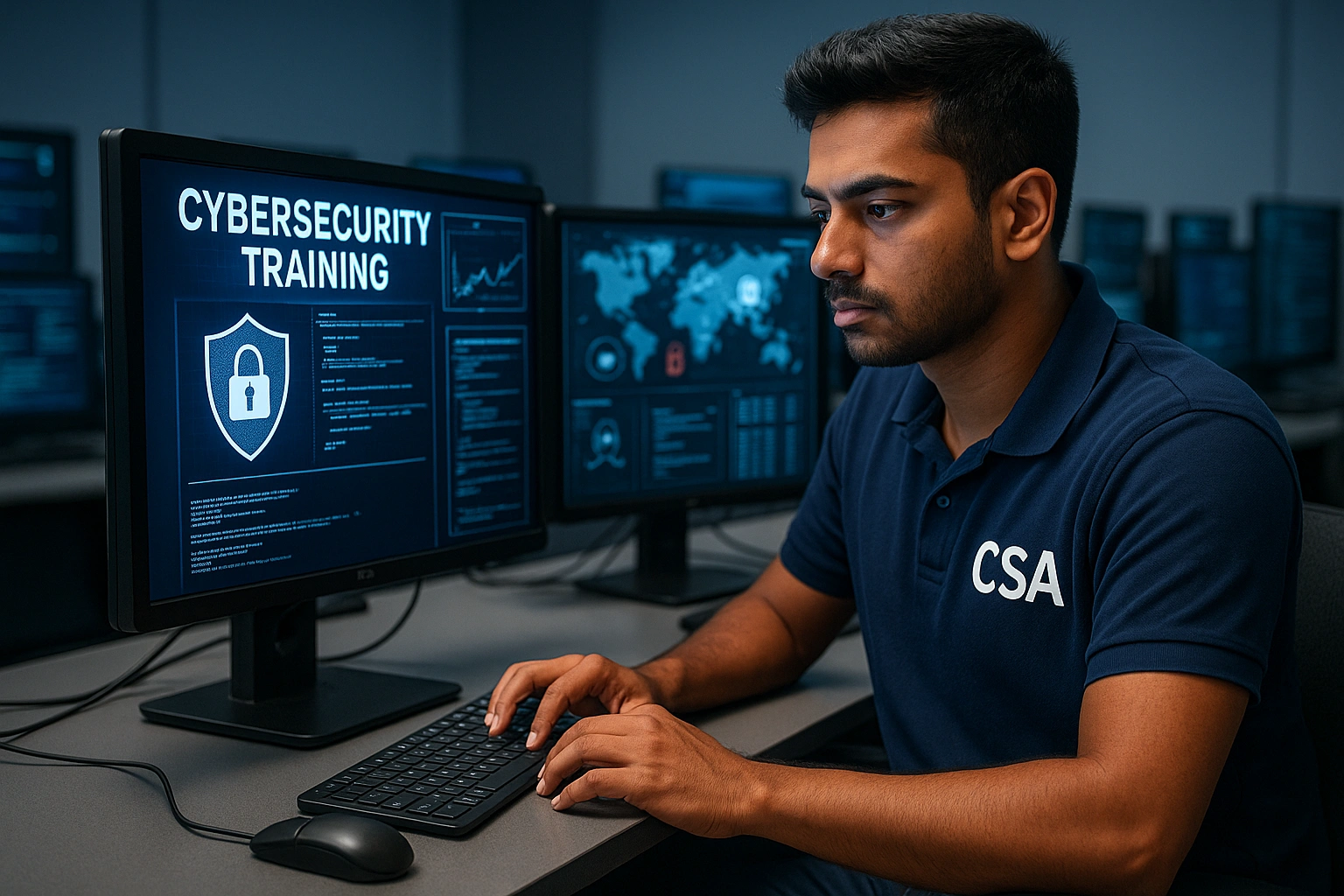
As digital threats evolve in scale and sophistication, the demand for well-trained cybersecurity professionals has never been higher. From critical infrastructure to global corporations, the need for skilled analysts capable of handling real-world threats is paramount. Stepping up to meet this challenge is the Cybersecurity Skills Academy (CSA), a leading training initiative that is transforming the way analysts are prepared for the frontlines of cyber defense.
With a curriculum grounded in hands-on learning, live-fire simulations, and threat intelligence integration, CSA is redefining what it means to be “job-ready.” More than just theory, their approach delivers practical, scenario-based training that reflects the dynamic nature of cybercrime today.
This article explores how CSA is preparing analysts for real-world cybersecurity roles and why its model is gaining global recognition across government, private, and academic sectors.
🔐 Understanding CSA’s Mission
Founded on the principle that cybersecurity education must evolve in real-time with the threat landscape, CSA aims to close the global cyber skills gap through immersive, industry-driven training.
Unlike traditional classroom or certification-only models, CSA focuses on:
-
Operational Readiness
-
Threat Intelligence Application
-
Incident Response Simulations
-
Adversary Emulation
-
Security Tool Proficiency
“Cybersecurity can’t be taught in a vacuum. At CSA, we simulate what analysts will actually face—malware outbreaks, ransomware attacks, phishing campaigns, zero-day exploits,” says Dr. Neha Joshi, CSA’s Director of Curriculum Innovation. “We make sure our analysts aren’t just exam-ready—they’re incident-ready.”
🧠 Curriculum Anchored in Reality
CSA’s programs blend theoretical knowledge with realistic, lab-based scenarios. Each module is tied to a real-world incident type and mapped to frameworks such as:
-
MITRE ATT&CK
-
NIST NICE Framework
-
OWASP Top 10
-
ISO/IEC 27001 standards
Modules include:
-
Threat Hunting & Analysis
Students learn how to proactively identify threats using endpoint detection, SIEM tools, and behavioral analytics. -
Malware Reverse Engineering
Using dynamic and static analysis, analysts learn to dissect malicious payloads and extract indicators of compromise (IOCs). -
Incident Response & Forensics
Analysts respond to simulated breaches, conduct root cause analysis, and write after-action reports. -
Cloud & Network Security
Real-world misconfigurations and attacks in AWS, Azure, and hybrid infrastructures are addressed. -
Red Team vs. Blue Team Labs
Live “attack and defend” labs pit students against each other to mimic enterprise-scale threat environments.
🧪 CSA’s Cyber Range: The Training Battlefield
At the heart of CSA’s approach lies its immersive cyber range, a virtual sandbox that replicates enterprise IT environments. This includes:
-
Simulated corporate networks
-
Windows/Linux/Cloud assets
-
Active Directory setups
-
Firewalls, IDS/IPS systems
-
Endpoint Detection & Response (EDR) tools
Each cohort trains with live-attack simulations created by CSA’s Red Team engineers, often based on recent APT campaigns or emerging ransomware strains. Learners play the role of blue team analysts responsible for defending a live system under siege.
“Theory without stress doesn’t translate into competence,” says Siddharth Menon, a CSA Red Team trainer. “Our cyber range gives learners muscle memory—the kind needed when real-world attacks hit at 3 AM.”
🌐 Industry Collaboration
CSA collaborates with industry leaders including:
-
Microsoft Defender
-
Palo Alto Networks
-
CrowdStrike
-
Splunk
-
CISA & CERT-In
These collaborations ensure that CSA analysts train on the same platforms and tools used by security operations centers (SOCs) globally. The CSA program also integrates threat intelligence feeds into learning scenarios, helping analysts develop contextual awareness about active global threats.
Additionally, CSA offers custom training pipelines for corporate security teams, tailored to industry verticals such as finance, healthcare, critical infrastructure, and telecom.
🎓 Certification with Real Impact
Graduates of CSA’s program receive not just a certificate—but a performance-based scorecard demonstrating proficiency across:
-
Threat Detection
-
Incident Handling
-
Reporting & Documentation
-
Communication Under Pressure
-
Tool Mastery (SIEM, IDS/IPS, Forensics, Endpoint)
This unique performance report is being increasingly recognized by recruiters as a trustworthy indicator of field readiness.
Major organizations, including Fortune 500 firms and national agencies, have begun recruiting CSA-certified analysts directly from cohorts. Several have made CSA performance reports part of their hiring pipeline.
💼 Success Stories: From Learner to Leader
🎯 Priya Shekhar – SOC Analyst, Global Bank
“CSA taught me to think like a threat actor. That helped me anticipate attacks and build stronger detections.”
After finishing CSA’s 12-week intensive program, Priya was hired by a leading global bank where she helped reduce phishing-related incidents by 47% within 3 months.
🎯 Abdul Rahman – Incident Responder, National CERT
“I faced a simulated APT attack in training that mirrored an actual attack I later responded to on the job.”
Abdul credits CSA’s red-teaming drills for preparing him to handle real crisis moments with confidence and composure.
Read More: gimkit join game
📊 CSA by the Numbers (2024–2025)
-
10,000+ analysts trained globally
-
85% employment rate within 4 months of completion
-
72% of CSA grads placed in Tier II and above roles
-
35 countries with active CSA training hubs
-
100+ industry partners using CSA-certified talent
🔮 The Future of Cyber Training: What’s Next for CSA?
CSA is now working to expand into AI security and autonomous threat response. Upcoming modules will address:
-
AI-generated threat detection
-
LLM security vulnerabilities
-
Behavioral biometrics
-
IoT and OT threat modeling
The academy is also launching virtual reality (VR) cyber ranges to simulate physical environments like smart factories and hospitals—where operational technology intersects with IT.
🧭 Conclusion
As cyber threats multiply, the world can no longer rely on “textbook-trained” analysts. The need is urgent—for defenders who are agile, prepared, and battle-tested. CSA’s real-world training model fills that gap, producing cybersecurity professionals who don’t just understand the threats—they’re ready to respond to them.
In the war against cybercrime, CSA isn’t just teaching. It’s training frontline warriors.
Read More : gimkit join
❓FAQs: CSA and Cybersecurity Training
What makes CSA different from traditional cybersecurity courses?
CSA uses real-world simulations, cyber ranges, and red team scenarios—ensuring learners are job-ready, not just certified.
How long is the training program?
CSA offers a 12-week intensive program, along with part-time and executive formats (ranging from 6 to 20 weeks).
What are the prerequisites?
Basic knowledge of IT networking and Linux is recommended. However, CSA offers a Foundation Bootcamp for beginners.
Is the training online or in-person?
Both options are available. CSA’s virtual cyber range makes remote training fully immersive.
Does CSA help with job placement?
Yes, CSA has tie-ups with hundreds of cybersecurity employers, and graduates often receive job offers within months of program completion.
Read More: